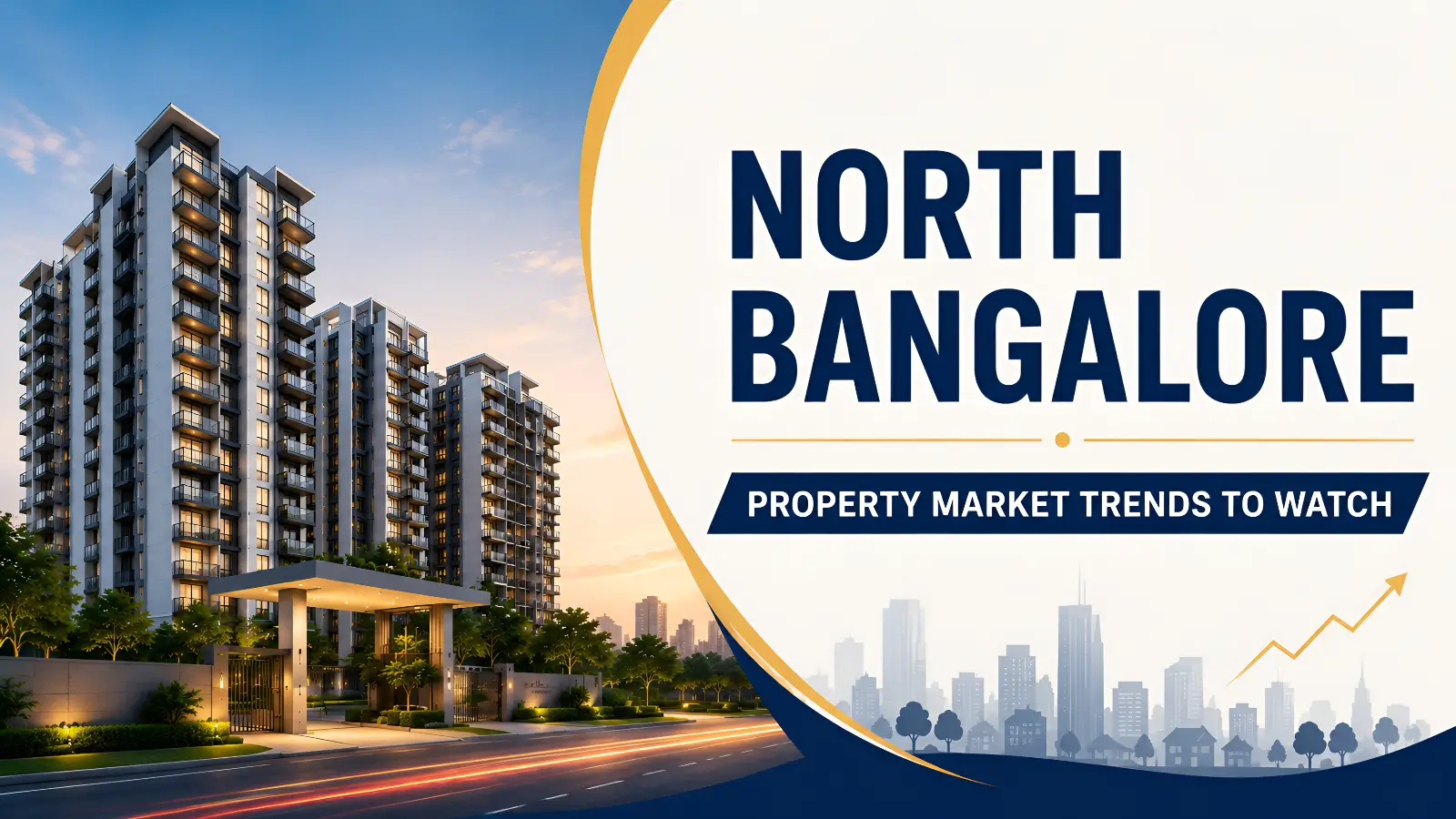
Why North Bangalore is growing fast - real estate growth drivers, airport corridor development, and how North Bangalore compares to other Bangalore zones.
Why Bangalore's Growth Geography Has Shifted Northward
Bangalore's residential growth geography has evolved across decades, with different geographies dominating at different times. Central Bangalore dominated through the 1970s-1980s. South Bangalore around Electronic City dominated through the 1990s-2000s with the early IT boom. East Bangalore around Whitefield dominated through the 2000s-2010s with the ITPL buildout. North Bangalore has emerged as the city's fastest-growing residential corridor across the 2010s-2020s, anchored by the airport, the Manyata commercial cluster, the broader airport-corridor commercial buildout, and the policy environment supporting branded ultra-luxury supply. The why North Bangalore is growing fast question therefore answers itself through this specific phase of Bangalore's geographic maturation rather than as a temporary or cyclical pattern.
North Bangalore Real Estate Growth Drivers
North Bangalore real estate growth drivers operate across multiple structural factors. Kempegowda International Airport opened in 2008 and has progressively expanded - second runway, T2 terminal, KIADB Aerospace SEZ buildout - each phase strengthening the airport corridor's positioning. Manyata Tech Park has matured into one of Bangalore's three largest commercial clusters, with 80,000-plus IT and corporate professionals concentrated within the airport-corridor catchment. The why North Bangalore is growing fast answer therefore involves both infrastructure (airport) and employment (Manyata and broader corridor commercial buildout) operating in parallel rather than depending on a single driver.
Airport Corridor Development and Residential Demand
Airport corridor development has been the most consistent infrastructure story in Bangalore over the last fifteen years. Each phase of corridor expansion adds another layer of demand to the broader catchment. KIADB Aerospace SEZ supports aerospace and defence employment density. The hospitality cluster around the airport supports business travel demand. The continued passenger growth at KIA (now over 50 million annually) supports continued corridor commercial buildout. The why North Bangalore is growing fast residential demand layer is therefore supported by the continued maturation of the airport corridor commercial ecosystem rather than just by infrastructure improvements alone. This combined infrastructure-plus-employment driver pattern is structurally different from corridors that rely on single drivers.
North Bangalore vs Other Zones - The Comparative Position
North Bangalore vs other zones comparative position helps contextualise the growth narrative. East Bangalore (Whitefield-Sarjapur) carries large residential supply but faces airport access disadvantage and increasing commute pressure on the eastern ORR. South Bangalore around Electronic City retains employment density but faces traffic and infrastructure constraints that limit growth. Central Bangalore is established but constrained by limited land availability for residential supply growth. The why North Bangalore is growing fast positioning therefore involves not just North's structural strengths but the relative constraints facing alternative geographies - North wins partly because alternatives face their own limitations.
Branded Developer Concentration as Growth Indicator
Branded developer concentration is a useful indicator of where the institutional growth thesis is being placed. Across North Bangalore, branded developers including Puravankara (with Purva Hennur 51), Embassy, Sobha, Total Environment, Brigade, Prestige, and Century have concentrated meaningful supply over the last decade. The why North Bangalore is growing fast institutional validation therefore is visible in the developer concentration - established Indian developers with multi-decade portfolios deploy capital where their analysis identifies durable growth, and North Bangalore has captured a meaningful share of this institutional capital deployment. This pattern reinforces the buyer-side growth thesis.
Forward Growth Outlook
Forward growth outlook for North Bangalore across the next decade involves continued infrastructure delivery (Airport Metro, Suburban Rail, Peripheral Ring Road), continued commercial cluster maturation (additional Grade A office supply across the corridor), continued residential supply addition (branded ultra-luxury supply continuing to build out), and the broader maturation of the airport-corridor ecosystem. The why North Bangalore is growing fast forward outlook therefore is supported by multiple drivers continuing in parallel rather than relying on any single driver. For buyers entering Purva Hennur 51 at pre-launch and holding across the next 10-15 years, this forward growth profile is part of what they buy into.
Growth Driver Reference
Growth Driver | Status | Forward Trajectory |
|---|---|---|
Kempegowda International Airport | Operational since 2008, expanding | Continued passenger growth, T2 expansion |
Manyata Tech Park | Mature, 80,000+ professionals | Continued tenant expansion |
KIADB Aerospace SEZ | Active, ~1,000 acres | Continued aerospace/defence tenant growth |
Airport Corridor Commercial | Building out | Continued Grade A supply addition |
Branded Developer Supply | Concentrated | Continued ultra-luxury and premium supply |
Airport Metro Extension | Active construction | Operational across next 3-6 years |
ORR North Network | Mature, expanding capacity | Junction improvements continuing |
Peripheral Ring Road | Phased construction | Completion across 3-7 years |
Bengaluru Suburban Rail | Active planning | Yelahanka segment activation |
FAQ
Why is North Bangalore growing faster than other zones?
Multiple structural drivers operating in parallel - Kempegowda International Airport since 2008, Manyata Tech Park maturation, KIADB Aerospace SEZ, branded ultra-luxury developer concentration, and the broader airport-corridor commercial buildout supporting residential demand.How does North Bangalore compare to East or South Bangalore?
East Bangalore faces airport access disadvantage and eastern ORR commute pressure. South Bangalore around Electronic City faces traffic and infrastructure constraints. Central Bangalore is constrained by limited land for supply growth. North Bangalore wins partly through its strengths and partly through alternatives' limitations.Will North Bangalore growth continue?
Yes. Forward drivers include Airport Metro extension, continued commercial cluster maturation, additional branded ultra-luxury residential supply, and the broader maturation of the airport-corridor ecosystem - supporting continued growth across the next decade.
Related Articles
Purva Hennur 51 Cost Sheet: Full Price Breakdown for 3 & 4 BHK
Discover the complete cost breakdown for Purva Hennur 51, including BSP, all-inclusive pricing, and configuration details for 3 & 4 BHK luxury apartments in North Bangalore.

Purva Hennur 51 Pre-Launch Review: Is It Worth Buying?
Explore an honest pre-launch review of Purva Hennur 51. Learn about its ratings, builder reputation, location advantages, and whether it’s a good investment in North Bangalore.

Purva Hennur 51 RERA Status: What Buyers Should Know
Learn about the RERA approval status of Purva Hennur 51, potential risks, and why it matters for buyers. Stay informed before investing in this ultra-luxury project in North Bangalore.

Purva Hennur 51 Launch Date & Booking Journey Explained
Discover the expected launch date of Purva Hennur 51 and learn about the step-by-step booking process. Stay informed about pre-launch offers, EOI benefits, and more.