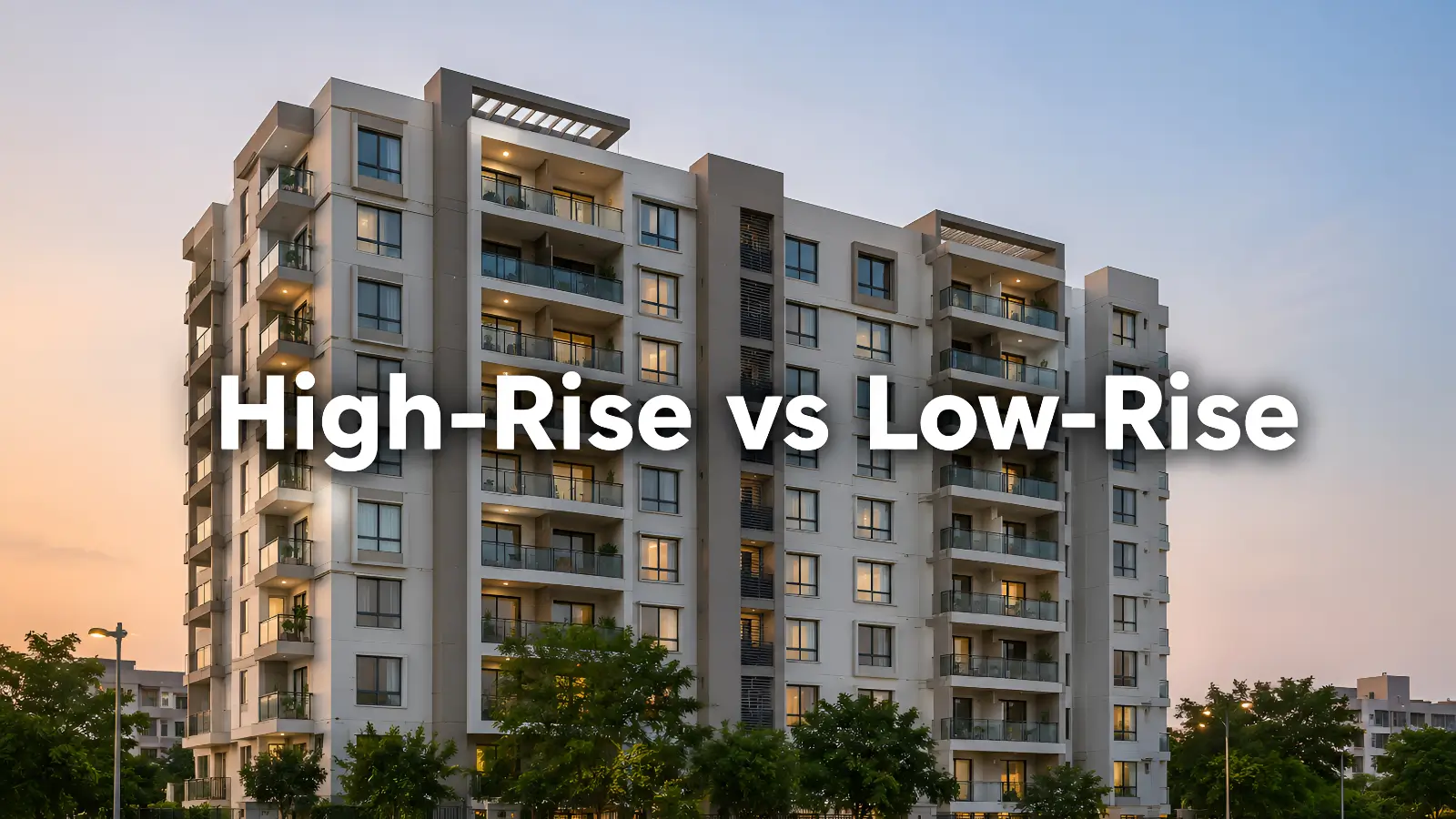
High-rise vs low-rise apartment investment - high-rise appreciation Bangalore, signature tower premium, and which format holds long-term value better.
Why the Format Decision Affects Long-Term Value
Buyers evaluating ultra-luxury Bangalore residential inventory face a format-level decision before configuration and specification details - high-rise or low-rise. Both formats serve legitimate buyer profiles, but they perform differently on capital appreciation, rental yield, lifestyle character, and resale liquidity. The high-rise vs low-rise apartment investment comparison therefore deserves substantive analysis rather than format preference assertion. For Purva Hennur 51 buyers evaluating the G+51 high-rise format, understanding why this format has structural advantages helps confirm the decision rationale.
High-Rise Appreciation Bangalore - The Documented Pattern
High-rise appreciation Bangalore has been documented across multiple branded developments over the last decade. High-rise inventory typically captures 1-2 percentage points of annual appreciation premium over comparable low-rise inventory in the same locality and price tier. The premium reflects three structural factors. First, scarcity - high-rise inventory above 40 floors is limited in Bangalore, with G+51 inventory particularly rare. Second, view premium - upper-floor inventory captures city views and skyline access that low-rise alternatives structurally cannot match. Third, signature tower premium - branded high-rise developments commanding the corridor often capture landmark status that supports both pricing and resale demand. The high-rise vs low-rise apartment investment differential therefore is empirical rather than theoretical.
Signature Tower Premium and Iconic Architecture
Signature tower premium is the additional value that landmark high-rise developments command beyond the standard high-rise advantage. Tallest residential tower status in a corridor or city captures durable signature value because new towers of comparable height take years to construct, limiting near-term competing supply. Purva Hennur 51 at G+51 height carries this signature positioning within the Hennur Bagalur corridor. The high-rise vs low-rise apartment investment signature layer therefore is one of the structural reasons the G+51 format is positioned for both immediate pricing premium and long-term value retention. Iconic tower architecture has historically commanded 5-15 percent additional pricing premium over standard high-rise, with the premium proving durable across cycles.
Resale Liquidity Comparison
Resale liquidity comparison across high-rise vs low-rise apartment investment shows specific patterns. High-rise inventory typically has stronger secondary market liquidity than low-rise alternatives because the buyer pool is broader (investors plus end-users), the configuration standardisation supports easier comparable pricing, and the branded developer concentration in high-rise format supports consistent buyer recognition. Low-rise inventory in customised or low-volume formats has narrower secondary market depth. The high-rise vs low-rise apartment investment liquidity differential therefore favours high-rise for buyers prioritising exit flexibility, while low-rise serves buyers prioritising customisation and privacy over liquidity.
Rental Yield Differential
Rental yield differential across high-rise vs low-rise apartment investment is smaller than the appreciation differential but still favours high-rise modestly. High-rise inventory commands marginal rental premiums for upper-floor views and contemporary amenity programming, with gross yields landing 0.2-0.5 percentage points higher than comparable low-rise alternatives. The rental demand base for high-rise inventory - senior IT professionals, NRI tenants, expatriate executives - tends to align more naturally with high-rise format preferences than with low-rise alternatives. The high-rise vs low-rise apartment investment rental yield case therefore is favourable but not dramatic - the primary case rests on capital appreciation rather than rental yield differential.
Where Low-Rise Wins
Where low-rise wins in the high-rise vs low-rise apartment investment comparison deserves honest acknowledgment. Low-rise serves buyers prioritising maximum privacy (no shared common walls, individual ground-level access), customisation freedom (architectural-level rather than specification-level), and the kind of community character that smaller-format developments support. Low-rise also avoids the high-floor wind exposure, elevator dependency, and the higher maintenance complexity that high-rise inventory carries. For specific buyer profiles - villa-preferring HNI buyers, families with privacy priority, buyers wanting full customisation control - low-rise remains the right choice. The high-rise vs low-rise apartment investment decision therefore is not universal but profile-dependent.
Format Comparison Reference
Investment Variable | High-Rise (G+51 format) | Low-Rise (G+5 or villa) |
|---|---|---|
Annual Appreciation | 7-10% | 5-7% |
Pre-Launch Pricing Advantage | 5-10% one-time | 5-8% one-time |
Combined 5-Year Return | 50-70% | 35-50% |
Resale Liquidity | Higher (broad buyer pool) | Lower (narrower buyer pool) |
Rental Yield | 3.0-3.6% | 2.5-3.2% |
View Premium | Strong (upper floors) | Limited |
Signature Tower Premium | Strong for landmark height | None |
Privacy | Strong with zero common walls design | Maximum |
Customisation Freedom | Specification-level | Architectural-level |
Best Buyer Fit | Senior professional, NRI, investment-focus | Villa-prefer HNI, max-privacy seeker |
FAQ
Which holds value better - high-rise or low-rise?
High-rise generally captures 1-2 percentage points of annual appreciation premium over comparable low-rise. The premium reflects high-rise scarcity (limited supply above 40 floors), view premium, and signature tower positioning - structural advantages that compound across the holding window.What is the signature tower premium?
Additional value that landmark high-rise developments command beyond the standard high-rise advantage. Iconic tower architecture has historically commanded 5-15% pricing premium over standard high-rise. Purva Hennur 51 at G+51 carries this positioning.When is low-rise the right choice?
For buyers prioritising maximum privacy, customisation freedom, and small-format community character. Villa-preferring HNI buyers and families with maximum-privacy priority often find low-rise better aligned with their preferences than high-rise alternatives.
Related Articles

Purva Hennur 51 Cost Sheet: Full Price Breakdown for 3 & 4 BHK
Discover the complete cost breakdown for Purva Hennur 51, including BSP, all-inclusive pricing, and configuration details for 3 & 4 BHK luxury apartments in North Bangalore.

Purva Hennur 51 Pre-Launch Review: Is It Worth Buying?
Explore an honest pre-launch review of Purva Hennur 51. Learn about its ratings, builder reputation, location advantages, and whether it’s a good investment in North Bangalore.

Purva Hennur 51 RERA Status: What Buyers Should Know
Learn about the RERA approval status of Purva Hennur 51, potential risks, and why it matters for buyers. Stay informed before investing in this ultra-luxury project in North Bangalore.

Purva Hennur 51 Launch Date & Booking Journey Explained
Discover the expected launch date of Purva Hennur 51 and learn about the step-by-step booking process. Stay informed about pre-launch offers, EOI benefits, and more.