Bangalore's Growth Story: Why the City Keeps Attracting Homebuyers
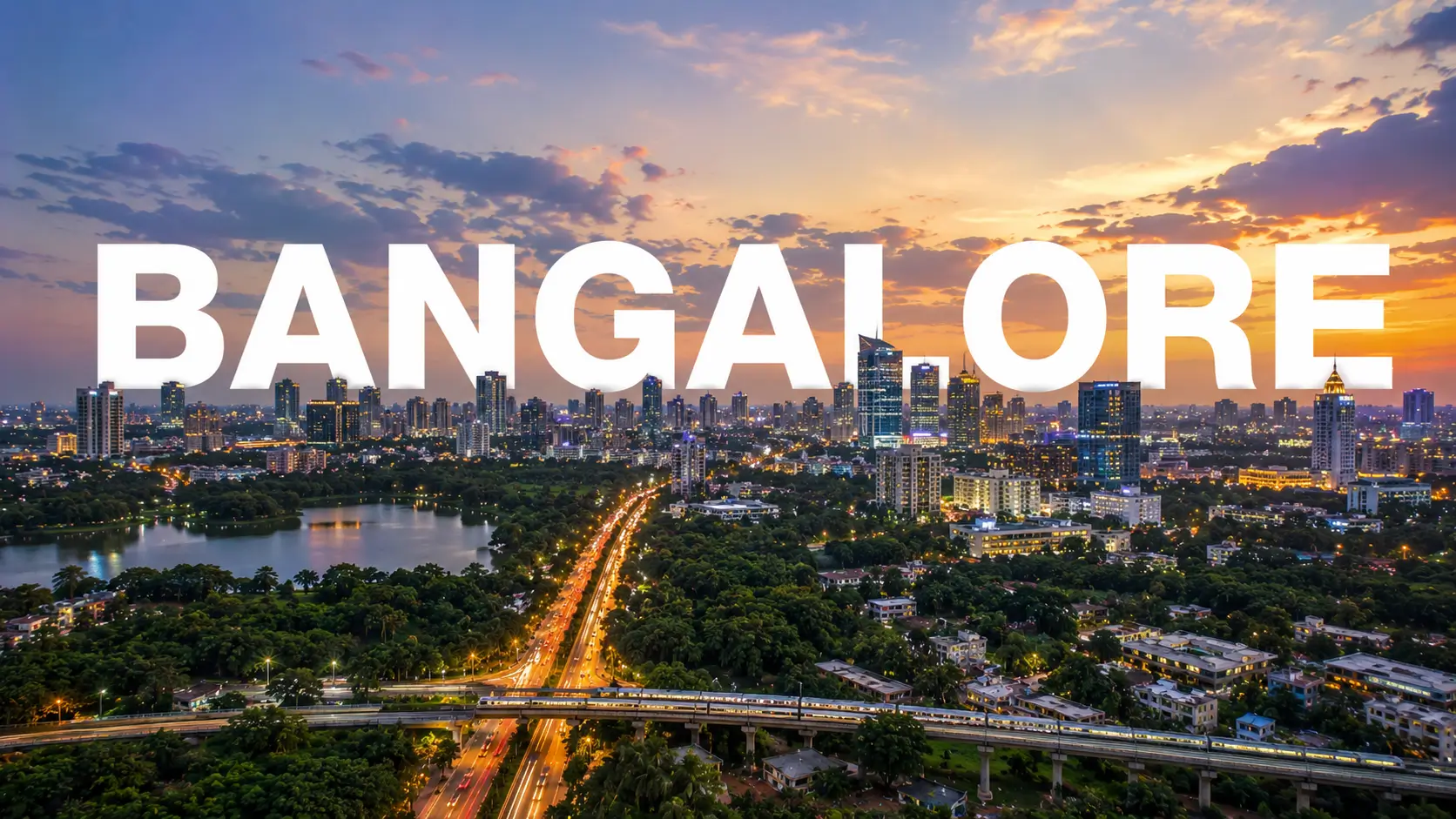
Bangalore real estate growth drivers - why Bangalore property demand sustains, city expansion patterns, and urban growth supporting Purva Hennur 51 thesis.
Why City-Level Context Matters for Specific Project Decisions
Specific project investment decisions sit within the broader city growth context. Bangalore real estate growth drivers therefore matter for Purva Hennur 51 buyers because the project's investment thesis ultimately depends on Bangalore continuing to attract residential demand from senior corporate professionals, NRI returnees, HNI investors, and family-stage buyers. Understanding why Bangalore continues attracting demand across multiple decades rather than tracking transient cycles helps buyers calibrate forward expectations against the realistic city growth backdrop.
IT and GCC Sector Foundation
IT and GCC sector foundation has been the most consistent Bangalore real estate growth drivers element across the last 25 years. Bangalore hosts the largest concentration of IT services majors (Infosys, Wipro, TCS, Cognizant), product technology companies, GCCs (Global Capability Centres), and the broader tech ecosystem in India. Approximately 35 percent of India's 1,800-plus GCCs are based in Bangalore. The sector's continued growth across cycles supports the senior tier residential demand that ultra-luxury developments like Purva Hennur 51 depend on. The Bangalore real estate growth drivers IT layer is structural rather than cyclical, supporting sustained demand across decade-long horizons.
Why Bangalore Property Demand Sustains
Why Bangalore property demand sustains operates through several specific structural factors. Talent ecosystem maturity attracts companies to locate operations in Bangalore rather than alternative geographies. Educational institution density (IIT, IIM, IISc, multiple top engineering and management schools) supports continued talent pipeline. Quality of life factors (climate, cosmopolitan culture, civic infrastructure) support employee and family residential preference. Multi-decade institutional infrastructure (banking, legal, professional services) supports the business ecosystem that companies require. The Bangalore real estate growth drivers structural factors therefore are mutually reinforcing rather than dependent on a single driver, supporting the demand resilience that buyers indirectly capture.
City Expansion Bangalore - The Geographic Reality
City expansion Bangalore has accelerated across the last two decades, with the metropolitan footprint extending across multiple corridors. South Bangalore expansion around Electronic City. East Bangalore expansion around Whitefield and Sarjapur. North Bangalore expansion across the airport corridor including Hennur Bagalur, Yelahanka, Devanahalli. West Bangalore expansion along the Tumkur corridor. The Bangalore real estate growth drivers geographic expansion supports continued residential supply addition across multiple corridors rather than concentrating in any single direction, supporting demand distribution and corridor-specific cycles that benefit buyers seeking opportunities outside oversupplied areas.
Urban Growth Real Estate Pattern
Urban growth real estate pattern in Bangalore follows a recognisable corridor-maturation sequence. Initial commercial cluster emergence (early IT campuses) catalyses corridor identity. Residential supply progressively lands serving the commercial employment base. Social infrastructure (schools, hospitals, retail) builds out supporting family residential. Branded developer concentration emerges as corridor matures. Ultra-luxury supply lands at the upper end as corridor reaches premium tier maturity. The Bangalore real estate growth drivers urban growth pattern has played out across multiple corridors and continues activating along the airport corridor including the Hennur Bagalur stretch where Purva Hennur 51 sits. Understanding this pattern helps buyers identify where corridors sit in their maturation curve.
NRI and HNI Demand Layer
NRI and HNI demand layer adds another structural Bangalore real estate growth drivers dimension. NRI buyers from Indian diaspora globally maintain India residential exposure for multiple reasons - investment diversification, future relocation planning, family ties, and the broader connection to India. Bangalore consistently ranks among the top three Indian destinations for NRI residential investment alongside Mumbai and Delhi NCR. HNI investors maintain Bangalore residential exposure as part of diversified portfolio allocation. The Bangalore real estate growth drivers NRI and HNI layer therefore adds demand depth beyond just resident professionals, supporting the ultra-luxury tier specifically where these cohorts concentrate.
Forward Outlook for Bangalore Growth
Forward outlook for Bangalore real estate growth drivers across the next decade supports continued sustained demand. IT and GCC sector growth continues across multiple sub-sectors. Educational institution expansion adds further talent pipeline. Infrastructure delivery (metro phases, suburban rail, peripheral ring road) supports continued city operational capability. Multi-corridor residential supply addition supports buyer choice across price tiers and localities. The Bangalore real estate growth drivers forward outlook therefore extends the historical pattern rather than projecting discontinuous change - supporting the case for branded ultra-luxury inventory like Purva Hennur 51 at the airport corridor.
Growth Driver Reference
Growth Driver | Status | Residential Demand Implication |
|---|---|---|
IT Services Sector | Multi-decade base, continued growth | Senior tier residential demand |
GCC Sector (35% of India) | Accelerating, 800k+ professionals | Senior management ultra-luxury demand |
Product Technology | Growing rapidly | Founder and senior tier demand |
Startup Ecosystem | Largest in India | Founder wealth demand layer |
Educational Institutions | IIT, IIM, IISc, multiple top schools | Talent pipeline + family demand |
NRI Demand | Continuous flow, top-3 destination | Senior tier rental and purchase |
HNI Allocation | Diversified portfolio inclusion | Ultra-luxury demand depth |
Quality of Life | Climate, culture, infrastructure | Employee residential preference |
Multi-Corridor Expansion | Active across N/S/E/W | Choice and corridor cycles |
Forward Infrastructure Delivery | Metro, rail, ring road active | Continued city operational capability |
FAQs
What drives Bangalore real estate growth?
Multiple structural factors operating in parallel - IT and GCC sector concentration (35% of India's GCCs), startup ecosystem density, educational institution depth (IIT, IIM, IISc), continuous NRI and HNI demand, quality of life supporting employee preference, and multi-corridor city expansion.
Why does Bangalore property demand keep sustaining?
Mutually reinforcing structural factors - talent ecosystem attracts companies, companies attract more talent, infrastructure builds out to serve both, branded developers concentrate to serve the senior cohort. The pattern is self-reinforcing rather than dependent on any single driver.
What's the forward outlook?
Continued sustained growth across the next decade supported by IT/GCC sector continued growth, infrastructure delivery (metro, suburban rail, peripheral ring road), continued multi-corridor residential supply, and continued NRI/HNI demand. The pattern extends historical trajectory rather than projecting discontinuous change.
Related Articles
Purva Hennur 51 Cost Sheet: Full Price Breakdown for 3 & 4 BHK
Discover the complete cost breakdown for Purva Hennur 51, including BSP, all-inclusive pricing, and configuration details for 3 & 4 BHK luxury apartments in North Bangalore.

Purva Hennur 51 Pre-Launch Review: Is It Worth Buying?
Explore an honest pre-launch review of Purva Hennur 51. Learn about its ratings, builder reputation, location advantages, and whether it’s a good investment in North Bangalore.

Purva Hennur 51 RERA Status: What Buyers Should Know
Learn about the RERA approval status of Purva Hennur 51, potential risks, and why it matters for buyers. Stay informed before investing in this ultra-luxury project in North Bangalore.

Purva Hennur 51 Launch Date & Booking Journey Explained
Discover the expected launch date of Purva Hennur 51 and learn about the step-by-step booking process. Stay informed about pre-launch offers, EOI benefits, and more.